


EL 101 – Mechanical Engineering Laboratory
Workshops were the only places of production until the advent of industrialization and the development of larger factories. Well-equipped machining, sheet metal work, and welding sections are part of the workshops. Different size lathes, milling machines, CNC milling machines, CNC turning machines, drilling machines, shapers, and grinding machines including instrument, surface, and cylindrical grinders are equipped with the machining section. There is a range of arc and gas welding machines in the welding section, including TIG and MIG welding sets and a plasma cutting machine. Industrial work and programs are also performed by the workshop workers.
1. CNC Turning Machine
Computer numerical control (CNC) turning is a subtractive machining process where a cutting tool is placed against a spinning piece to take material off. This is usually done with a CNC lathe or turning center which cuts the material including wood, metal, and plastic. CNC turning does the process by rotating the workpiece and cutting away at it (by moving a static cutting bit against the workpiece). Turning CNC can manufacture automobile frames, surgical equipment, airplane engines, and hand and garden tools.
2. CNC Milling Machine
CNC milling is a subtractive form of manufacturing, which means that material is removed from the workpiece to produce the final design shape. The process starts with a computer-aided design (CAD) drawing or 3D model of the final component. the machine can do plain milling, face milling, angular, and form milling processes on the metal and wooden pieces. the element of precision and speed that CNC machining provides make this method of manufacturing popular in healthcare, aerospace, automobile, and defense industries that produce some of the most important technology in the modern world. CNC milling machines can manufacture delicate and curved products in the automotive and health care industry.
• The machine can be used for manufacturing plastic molds
• The machine can be a part of the CAM workshop
• The machine will be active in the backup part of the factory for repair.
• CNC is an educative machine also and it is used for teaching machining
• Fixed rollers for cars are one of the products of this machine.
• CNC will be a great asset for teaching G Code programming in an educative environment.
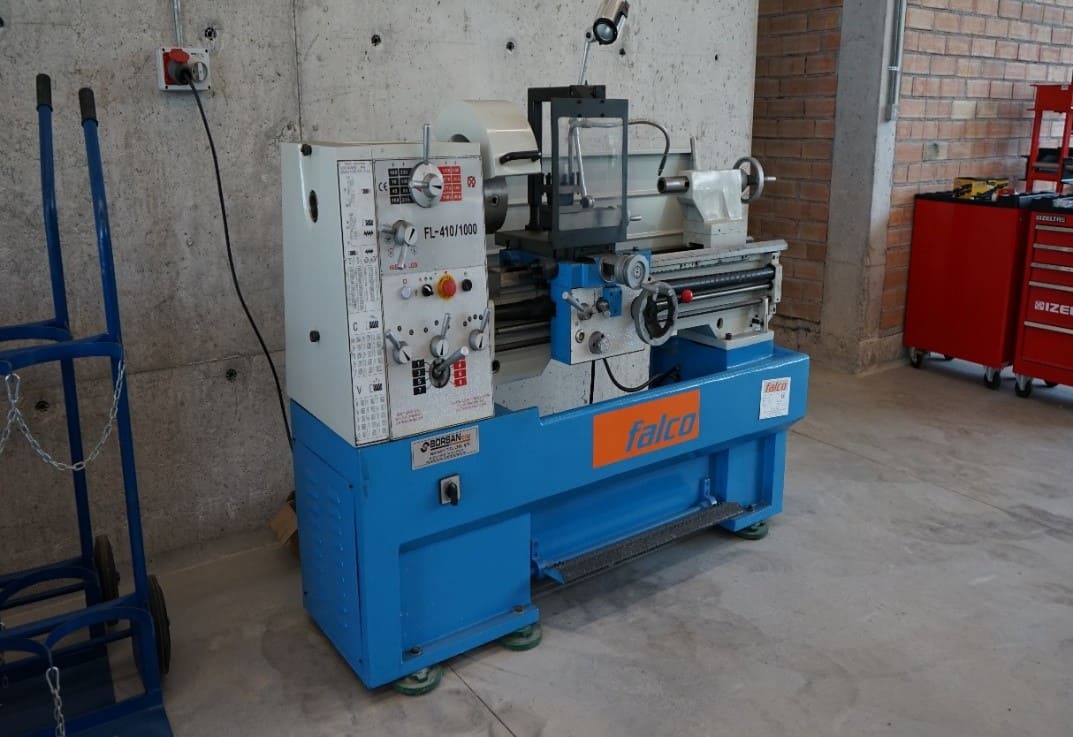
3. Turning Machine
Turning is a method of machining and a process of material removal that, by cutting off unwanted materials, produces the desired appearance of the workpiece. A turning machine or lathe, workpieces, workpiece holding device, and cutting tools need to be included in the turning process. It is also possible to use the most suitably equipped metalworking turning machines to manufacture most revolution solids, plane surfaces, and screw threads or helices.
4. Milling Machine
Milling is a procedure conducted by a machine in which the cutters rotate in the direction of the angle with the instrument axis to cut the material from the workpiece present. With the assistance of milling machines, from small items to large ones, many operations and functions can be done. These machines can manufacture parts for ventilators, pens, paintball guns, rims for tires, guitars, parts for wooden clocks, badges, and much more.
5. Grinding Machine
One of the power tools or machine tools used for grinding, a grinding machine, also shortened to grinder, is a process of machining using an abrasive wheel as the cutting tool. A small chip from the workpiece is cut by shear deformation by any grain of abrasive on the wheel’s surface. Grinding is used to finish workpieces that must display high surface quality and high precision of shape and dimension. These machines can clean and smooth the final product of other machines.
6. Drilling Machine
A drill or drilling machine is an instrument used mainly to make round holes or drive fasteners. It is equipped with a bit, either a drill or a driver, protected by a chuck, depending on the application. A hammer feature is also included with some driven drills. In speed, strength, and scale, drills differ widely. They are electrically powered devices characteristically corded, with hand-operated devices. These machines can be used to drill, ream bore, and tap the products.
7. Automatic Miter Saw Machine
A saw or sawing machine is an instrument used mainly to cut wood or metals. A miter saw or miter saw is a saw used to make accurate crosscuts and miters in a workpiece by positioning a mounted blade aboard. A miter saw in its earliest form was composed of a backsaw in a miter box, but in modern implementation consists of a powered circular saw that can be positioned at a variety of angles and lowered onto a board positioned against a backstop. Powered miter saws are also commonly referred to as chop saws. It is used for sizing and removing excess material from items before machining.it is mostly used in piping and manufacturing frames.
8. Hardening Furnace
The hardening heat treat process uses heat to increase the hardness of the surface of the material which in turn decreases its vulnerability. Hardening results in a tough outer case and a strong core. The hardening process is done in an industrial heat treat furnace. There are different types of them such as Cast link belt furnaces, Humpback furnaces, and Mesh belt furnaces. Hardening furnaces increase the strength and durability of final products in the automotive and aerospace industry.
9. Plasma Cutting Machine
Plasma cutting is a process that cuts through electrically conductive materials by means of an accelerated jet of hot plasma. Typical materials cut with a plasma torch include steel, stainless steel, aluminum, brass, and copper, although other conductive metals may be cut as well. Plasma cutting is often used in fabrication shops, automotive repair and restoration, industrial construction, and salvage and scrapping operations. Due to the high speed and precision cuts combined with low cost, plasma cutting sees widespread use from large-scale industrial CNC applications down to small hobbyist shops.
• It is used to cut metal sheets with 2 cm width
• It works as a mechanical repair and maintenance part of factories.
• Furthermore, it is used to manufacture interior decoration for offices and residential places.
10. 3D Scanner
A 3D scanner can be based on many different technologies, each with its own limitations, advantages and costs. Many limitations in the kind of objects that can be digitized are still present. For example, optical technology may encounter many difficulties with shiny, reflective or transparent objects.
• It is used to detect sharp angles and curves of complex geometries like automotive lights, car seats and other complex shapes.
• It is used to gather information about surfaces.
This workshop, equipped with manufacturing machines such as lathes, milling machines, drilling machines, grinding machines, welding units, plasma/laser cutting systems, and CNC machine tools, enables students to gain hands-on experience in industrial production processes, including machining, forming, welding, and CNC programming. Both conventional machine operations and CNC applications are taught within the scope of related courses.
The experiments conducted in this laboratory are as follows:
1. Turning Machine (Straight Turning- Taper Turning- Step Turning- Facing- Parting (Cut-off)- Grooving- Boring- Drilling (on a lathe)- Chamfering- Form Turning)
2. Milling Machine (Plain (Slab) Milling- Face Milling- Form Milling- Side Milling- Gang Milling- T-Slot Milling- Drilling- Boring)
3. Drilling Machine (Drilling- Reaming- Boring- Counterboring -Countersinking- Spot Facing- Tapping- Trepanning- Core Drilling- Step Drilling)
4. Grinding Machine (Surface Grinding)
5. Welding Machine (Spot Welding- Electrode welding)
6. Plasma Cutting Machine (Straight Line Cutting- Shape Cutting- Bevel Cutting- Hole Cutting- Edge Starting)
7. Laser Cutting Machine (Straight Line Cutting- Shape Cutting- Bevel Cutting- Hole Cutting- Edge Starting)
8. CNC Milling Machine
9. CNC Turning Machine Turning machine (Straight Turning- Taper Turning- Step Turning- Facing- Parting (Cut-off)- Grooving- Boring- Drilling (on a lathe)- Chamfering- Form Turning)
10. Milling machine (Plain (Slab) Milling- Face Milling- Form Milling- Side Milling- Gang Milling- T-Slot Milling- Drilling- Boring)
11. Drilling machine (Drilling- Reaming- Boring- Counterboring -Countersinking- Spot Facing- Tapping- Trepanning- Core Drilling- Step Drilling)
